Friday, 20 April 2012

The Foundling Hospital, London

The Hospital was founded by royal charter in 1739. It was established 'for the maintenance and education of exposed and deserted young children'. It admitted its first infants in 1741. Being reliant on private funding meant resources were tight which meant restricting admissions. To ensure fairness, the Hospital instituted a system of selection by ballot in 1742. Women who brought infants to the Hospital drew coloured balls from a bag. A white ball meant the child was admitted, subject to checks for age and infectious disease; a black ball meant rejection. Between 1749 and 1756 only 803 babies were accepted out of a 2, 808 brought to the hospital.

The number of children actually reclaimed by their mothers may have been tiny, but ensuring the mothers were able to take their children back was an important priority for the hospital. Each baby left was registered with a number, accompanied with information designed to assist future identification.
On the printed registration forms or billets, there were headings for entering the sex of the child, the clothes it was wearing on admission, and any special distinguishing marks on its body. In addition the Hospital encouraged the mothers to supply a token, which might be a note, a letter, or a small object, to be kept with the billet as an identifier.
Small objects were especially suitable when the mother concerned was illiterate. Such tokens may include:
  • A padlock and key
  • brooches
  • rings
  • buttons
  • metal watch seals
  • coral necklaces
  • coins
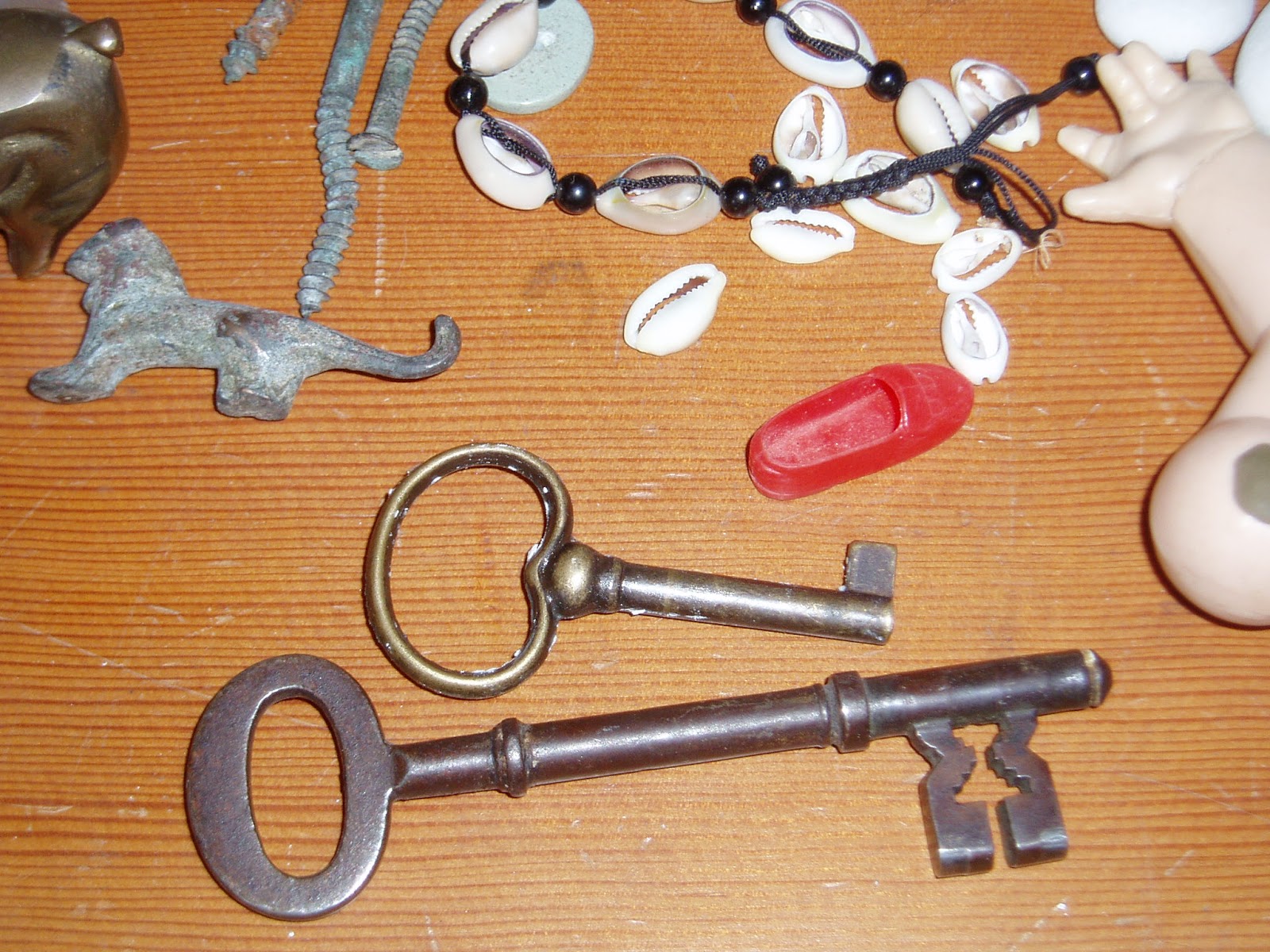
  • keys
  • swatches of textiles (usually cut from from a sleeve, a ribbon, or a gown)
These tokens remain interleaved in billet books. They and the stories they tell about manufacturing, fashion, women's skills, childrearing and maternal emotion are at the heart of Threads of Feeling. (An exhibition hosted by The Foundling Museum, London).

These Hospital tokens remind me of some of the charms and amulets which I have been observing recently. I especially like the use of textiles, which is reminiscent of antique patchwork quilts. The ones patched together from old clothing and often having significant and sentimental meaning to the owners and families. Often, objects such as human hair, hair pins, handkerchiefs, newspapers and letters were trapped and hidden between the layers of fabrics.  An historical family gift which would be passed down through generations. Each patch with its own story to tell. 
Examples of old American Patchwork quilts


Thursday, 19 April 2012

Breaking the mould

The time came to experiment and make. I have purchased so forth ingredients:

  • clay
  • lego bricks
  • latex
  • plaster of paris
  • alginate
  • siligel
  • metal gauze
  • metal sheeting
  • bees wax
 I wanted to try a two part mould so I could cast a full object in the media of my choice. I collected an array of objects from around the house and my studio...

keys  shells  doll parts  amulets  animal objects  teeth bones  skull  wire  cogs  flowers  seed pods


Siligel self hardening putty


Pushing the key into clay and building a plasticine wall to hold the plaster


Doll leg in clay with Lego wall (lets the plaster through as not completely air tight)


embedding objects into clay and building a wall to hold the plaster


  a shark's tooth


a foot, a key and a two part plaster mould


separating the mould


Alginate pour


broken doll leg cast


To be continued...

Today's rant - unwanted dog dirt

Ok, so I have been told (by expert blogger JS) that it's more fun to use my blog to rant. The problem is, I would be ranting all night. I once went through a phase of watching Curb your Enthusiasm, only to find that the more I watched it...the more I started becoming Larry David. He's a man who likes a rant and a good ole complain.

So, today's rant:

I stayed in my pyjamas for most of the day. 1) partly because I couldn't be bothered getting washed and dressed, 2) I was working and didn't have time to get washed and dressed. (This, I find is one of the many pleasures of being self employed). 3) it was raining outside.
Eventually it got so late that I was embarrassed to answer the door when the postman knocked (with my recent Ebay delivery), I resigned to the fact that I had to eventually get dressed. Having not yet walked the dog, I threw on some clothes and bundled myself in what seemed like swaddling clothes. The weather has turned dismal again, resulting in me leaving the house each day looking like a fat Russian peasant.
So as I opened the front door and faced the grey skies and torrential rain, what was there to greet me? Oh yes....a great big dog shit! I would like to add at this point that IT WAS NOT FROM MY DOG. I know who's dog it was though...the family up the road who never f*****g clean up after their cocker spaniel. They just let it wander along, shitting and pissing wherever it takes it's fancy. It's been carrying on like this for a good while now, years in fact. Last time it happened I collected it in a poo bag (the shit, not the dog), and left it on their doorstep. Nothing happened.
So, I had the nice job of clearing up the now rained-on poo from my path, and there's something I hate about cleaning up other dog's poo. I don't mind my own dog's poo, but I felt dirtied after the experience.

So the question is.....what do I do next?

a) Put the shit on the neighbour's doorstep again
b) Put it in my own wheelie bin (which is where it is at present)
c) Make a sign saying "don't f*****g let your hound shit in my garden
d) other


Rant over...for now.

The Key as a symbol

Historically, the key has been one of man`s most universal symbols. Christian saints, pagan gods, medieval kings - all have been shown holding keys as symbols of their spiritual or temporal power. Spiritually, the key has represented the power to open the door between this world and the next. Temporally, it has represented rule over everything, from empires and feudal kingdoms to single households.
Throughout history, keys have been used to symbolize man`s ability to gain access to those things of either a material or spiritual nature which are of the greatest significance to him.
An ancient key tradition that still survives stems from the practice of emperors, kings, princes and persons in positions of august authority presenting elaborately designed "chamberlain keys" to officials as symbols of their appointment to high office. Today, this is manifested in the presentation of a "key to the city" to visiting dignitaries.
 The key denotes liberation, knowledge, the mysteries, initiation. In Christianity the key is the emblem of St. Peter as guardian of the gate of heaven; it is also an attribute of the Pope. In Japanese mythology the three keys of the granary are love, wealth and happiness.


I have had a fascination with keys for a long time. I can remember, as a child digging in the garden to find lost or discarded keys. The older and rustier the better.
I now have a collection of keys and locks, from old padlocks, giant wooden doorway locks, metal door locks, exquisite tiny keys used for fob watches, old clock keys, huge door keys and others which I have not yet identified. I have been experimenting with casting a few of these.

Superstition

The key is also known as a belief for curing nosebleeds. Dropping a key was also known as a sign of bad luck, or at least a removal., as indicated by Thomas Hardy:

'I hope nothing is wrong about mistress,' said Maryann...'but an unlucky token came to me indoors this morning. I went to unlock the door and dropped the key, and it fell upon the stone floorand broke into two pieces. Breaking a key is a dreadful bodement. I wish mis'ess was home'
Hardy, Far from the Madding Crowd (1874)

Keys could also bring protection

If a newly-born infant cries, three keys should be placed in the bottom of the cradle.


Saints, Signs and Symbols

With the knowledge that the de Mortillet collection has a significant amount of religious objects, I have decided to research into the symbolism of saints. Saints are a main feature of the votives and have many offerings and meanings devoted to them.
Maybe we could use use this as inspiration when designing our own pieces.

A few examples of Saints and their symbols:

St Agatha - Gold pincers on a red field
St Agnes - White lamb, gold book, on a red field
St Alban - A gold saltire on a blue field
St Alphege - Gold axe-head on silver handle, and field of red
St Sebastian - Gold arrows on a red field
St Romuald - A gold ladder on a black field
St Stephen - A gold palm branch, silver stones, on a red field
St Thomas Aquinas - A gold sun in splendour with the eye, on a black field

Other symbols include:
crosses
stars
flowers, fruits, trees


Flowers, fruit, trees

Acacia - Immortality of the soul
Almond - Divine approval of favour, (St Mary the Virgin)
Apple - Salvation, sin
Carnation - (Red), Pure love
Cherry - Good works
Daisy - Innocence
Iris - The sorrow of the Virgin for the Passion of the Lord Jesus Christ
Ivy - Life external, Fidelity
Laurel - Triumph, eternity
Lily - Purity
Narcissus - Divine love
Oak - Faith and endurance
Olive branch - Peace
Palm - Spiritual victory
Pomegranate - Fertility
Poppy - Fertility
Violet - Humility
Wheat - Bountifulness


Significance of colour

Black - solemity, negatation, sickness, death
Black and White - Humility, purity of life
Blue - Heavenly love, unveiling of truth, St Mary
Brown - Spititual death and degradation
Gold (see white)
Grey - Ashes, humility, mourning
Green - Spring, triumph of life over death,charity, good works, hope
Purple - Royalty, Imperial power
Red - Martyred saints, love, hate, sovereign power
Violet - Love, truth, passion, suffering
White (Gold) - Innocence of soul, purity, holiness of life, Christmas, Easter, etc.
Yellow - Dingy:Infernal light, degradation,jealousy, treason, deceit


Wednesday, 18 April 2012

Votive offerings and charms


A votive deposit or votive offering is one or more objects displayed or deposited, without the intention of recovery or use, in a sacred place for broadly religious purposes.

  • throwing coins into a well
  • buried
  • cast into water or peat bogs
  • broken objects
  • wine
  • oil
  • incense
  • candles
  • food
  • metal objects
  • flowers

A Charm

  • A spell (paranormal) or incantation
  • any "lucky charm" such as:
  • amulets
  • charm bracelets
  • touch pieces
  • painted pebbles
  • Italian charm bracelet
  • Similar to blessing the infusion of something with holiness, divine will, or one's hopes
plaster casts for wax votives
clay figure - votive offering

metal charms


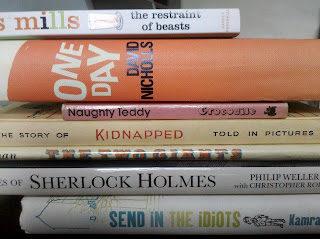
Book spine poetry


A nice idea
which I wanted to
try ...


... a few more


this one is from a friend....brilliant!

Small Blessings - The Pitt Rivers Museum, Oxford

I was asked to take part in a new project based at The Pitt Rivers Museum, Oxford. I will be working with a group of adults from Mind (a mental health charity), observing a new collection of amulets,charms and votives which have been donated to the museum. The collection belonged to Adrien de Mortillet (1853-1931) and contains examples from all over the world. I am trying to find out more about de Mortillet, but so far have not been too successful. I do know that he had many careers including a perfumer and a balloonist!

Over 5,000 objects have been donated to the museum, and it is the job of the conservationists to catalogue these and create a database so that they can be easily found in the future. A separate blog has been set up to document this process which can be found here.
http://pittrivers-amulets.blogspot.co.uk


My job is to work with the members of Mind to discover more about these objects and to create our own pieces, which will be exhibited in the museum at the end of the project.
From observing the amulets, charms and votives at the museum they are mainly made out of the following materials:

clay
plaster
wax
natural materials such as seeds, bark, fruit, grasses
parts of animals and human including hearts, bone, teeth and skin
metal
textiles
food
plaster moulds with wax casts

metal charms and amulets

votive offering - clay

magic bundle placed in the village to lay a curse


I decided to try and keep to these materials...although I won't be using any human hearts! Initially, I will be experimenting with plaster moulds, clay, metals and textiles and see where that takes me.
It's an exciting project to be involved in and I am looking forward to seeing what we come up with.

The Old Fire Station


Last summer myself and artist Rachel Barbaresi, were commission to design and create The opening artwork for The Old Fire Station in Oxford. Read more about The Old Fire Station here:

http://www.oldfirestation.info/

Here is our blog which documents the project from start to finish. We worked with a group of homeless people and based ourselves at The Botanic Gardens, Oxford.

http://artistsofs.blogspot.co.uk/

The 12 month direct debit feeling


I have been away from this blog for too long now. Always with the great intention of posting useless, but sometimes interesting information here, I get dirtily and rudely interrupted by Facebook, Ebay or other online things to while away the hours.
Then, before I know it, I have neglected my blog for months on end. I find this feeling similar to paying for a years subscription to a gym with all good intention of going each week, then missing a few here and there - all of a sudden I'm at home baking cakes and the thought of having to go to a gym is the last thing on my mind.
So with all good intentions in hand, I will hereby attempt to write something here at not-so-vast intervals...I can't promise though, as there may be cakes to be baked!


Friday, 5 August 2011

Where's yer Mama gone?


... Picking Blackberries. Far, far away.

This morning Lebowski and I took a stroll to the Corpus Christi Playing fields, over the railway tracks.


We spotted lots of blackberries. I've been meaning to pick some all week and keep forgetting to bring out a punnet to collect them. All I had on me was a 'poo bag' (without poo, I hasten to add!)


There were some lovely bushes full to the brim with ripe berries, ready for the picking. I managed to collect 1.5 kilos of them, however, I made sure I left some for the wasps and birds and spiders too.
Whilst picking the blackberries it made me think about fairy tales - the use of brambles and thorns and overgrown forests. It all seemed quite enchanting and peaceful... until Lebowski started barking that is!


According to folklore legend, on the 10th October the Devil pees on the blackberries and they become unfit to eat.


Lebowski was rather impatient and continued to whine and bark at me every time I stopped at another bush. I did try to explain that she wouldn't be complaining when she's having toast and jam!


We discovered a plant which seemed as if it was related to Lebowski...


We also spotted the places where the deer had been lying the night before. I really like the different directions of the flattened grass, it seems to possess lots of movement.


When I got home I rinsed the blackberries and left them to drain on a clean tea towel, ready to turn into jam. I have been trying to find an interesting blackberry jam recipe, and thought about adding vanilla. We'll see.....


When I got home the smell from the blackberries reminded me of when I was a child, picking blackberries with my Mum by the cemetery. I remembered all the little worms crawling out of them when she left them to soak before making them into jam.


Jam recipe ideas:

http://allrecipes.co.uk/recipe/8075/beautiful-blackberry-jam.aspx


http://allrecipes.co.uk/recipe/8112/blackberry---apple-jam.aspx


http://allrecipes.co.uk/recipe/8450/seedless-blackberry-and-elderberry-jam.aspx


http://allrecipes.co.uk/recipe/9293/blackberry-chilli-jam.aspx


Blackberry-Picking by Seamus Heaney
Late August, given heavy rain and sun
For a full week, the blackberries would ripen.
At first, just one, a glossy purple clot
Among others, red, green, hard as a knot.
You ate that first one and its flesh was sweet
Like thickened wine: summer's blood was in it
Leaving stains upon the tongue and lust for
Picking. Then red ones inked up and that hunger
Sent us out with milk cans, pea tins, jam-pots
Where briars scratched and wet grass bleached our boots.
Round hayfields, cornfields and potato-drills
We trekked and picked until the cans were full
Until the tinkling bottom had been covered
With green ones, and on top big dark blobs burned
Like a plate of eyes. Our hands were peppered
With thorn pricks, our palms sticky as Bluebeard's.
We hoarded the fresh berries in the byre.
But when the bath was filled we found a fur,
A rat-grey fungus, glutting on our cache.
The juice was stinking too. Once off the bush
The fruit fermented, the sweet flesh would turn sour.
I always felt like crying. It wasn't fair
That all the lovely canfuls smelt of rot.
Each year I hoped they'd keep, knew they would not.