Tuesday, 15 May 2012

Natural charm

 Sometimes it's the more simple of the collections which appeal to me most. Also the handmade, the idea of using what is around you to create the amulets.  The idea of putting more than one object together to create a whole new meaning - that is what appeals to me.

Teeth and claws

Tooth and bone necklace worn to cure disease and illness

One of the many curious drawers at the museum

Natural objects stabbed with nails and wrapped with thread

Nuts used to hang in a boat for good luck

Seal charm


A cure for warts

More from The Pitt Rivers Museum, Oxford

Young child, silver
 I went back to the Pitt Rivers Museum to have another look at the amulets collections. I wanted to expand my initial ideas for the metal pieces. I like the way that these pieces are in relief with the flat space surrounding them. I will experiment with the metal to see if I can get a similar effect.

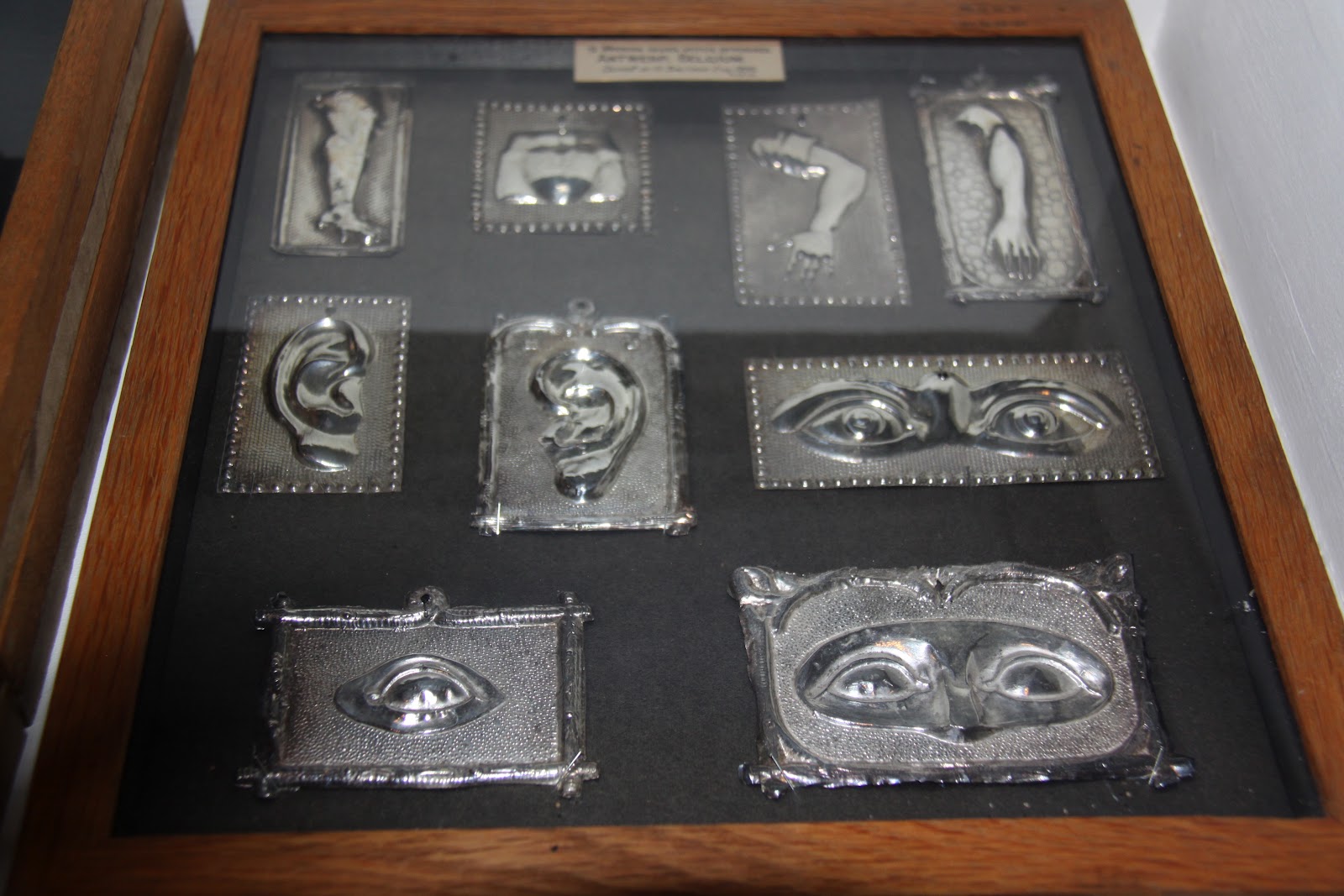
Box of silver body parts, used as votives if the person has an ailment with that particular part of their body

View through one of the cabinets

 I am also interested in the way in which the collections have been displayed. The cabinets are often cluttered and full of notes, labels and fascinating facts about the objects. Some objects are in small display boxes, others in specimen bags and others simply labelled.

cow, silver
 This cow reminds me of a silver butter dish which I have, the lid of which has a cow very similar to this.

Case displaying labelled metal amulets and votives

Eye votive

Figures of a boy and girl, clay
 I particularly liked these clay figures, mainly for their simplicity and naivety. Also this illustrates the fact that something simple and almost insignificant can become an object of meaning/superstition/power because of the presence and meaning which someone has put upon it.


Clay and plaster moulds and casts
 It was interesting to see the casts again, especially after experimenting for so long myself with this technique. I like that the moulds have been displayed alongside the casts.

Mould for the goat

Various casts from clay, wax and wood

Wax goat with mould

Body part votives used as offerings for medical conditions

Releasing the moulds

 I was quite pleased with the recent batch of moulds, taken from doll's parts. They seem to have worked much better by placing the object at the end of the retainer wall. They came away easily.

 This is the first attempt at the casting from the first moulds. Although I had to glue some bits together which broke as they were extracted from the mould, it is hidden with the silver leaf. I chose to use the silver leaf as it creates a shinier finish to using silver paint, spray or pen. It has more depth to it. Someone said it reminded them of chocolate. I'd like to attempt to make a whole body (but maybe using different parts from odd dolls, and maybe an animal head)...watch this space!

 Second casting attempt with this mould. It seems to work much better if you leave the plaster over night to dry out/ go off a bit more. This way it is stronger when releasing from the mould, and less breakages!

Second attempt leg cast

Saturday, 12 May 2012

Barbie Girl

Moulds held together with elastic bands


 I decided to attempt to make more moulds. Making these moulds has been a learning process, from how to build the retaining wall, where to position the object, what consistency is best for the plaster, when to release the moulds. With all this in mind I have made some more examples.

Studio table
 I wanted the casts to be slightly smaller than the previous ones, so I used some old Barbie dolls. I positioned the body parts right at the end of the retaining wall, this will then be where the pour enters the mould. I also made the whole thing smaller as to save on plaster.

Half of plaster moulds
 The first half of the moulds seem to have worked well, although I am slightly worried about of couple of areas which have over hangs.

Second half of plaster pour
 After building up the retaining walls again, I have done the second plaster pours. Fingers crossed.

Silver leaf onto plaster casts
I wanted to see what the silver leaf looked like on the plaster. It was quite fiddly to do, and it needs a coating of size, but I was quite pleased with the effect so far.

Monday, 7 May 2012

Oil paint & newsprint

When I was adding the oil colour to the metal, I was interested in the paint left behind on the paper underneath. I thought this could also suggest movement. These are a few ideas I played around with, but it's something which could be developed.


Metal Animation

Whilst experimenting with the metal for the small Blessings project, I started to think that the pieces would work well in an animation. It would mean re cutting each movement, which would mean a lot of work, but I think it would work well.

Donkey and fish - detail

Donkey and monkey - detail

Monkey and donkey - interaction

Donkey - adding other elements with different materials such as chalk

Eagle - straight after cut

Eagle - after etching and oil colour

Tiger - added texture with tools and oil colour


Banging the metal with a copper hammer to distress

Sunday, 6 May 2012

Sheet metal

I wanted to see if I could use the sheet metal to create something similar to the amulets which I had seen at The Pitt Rivers. Particularly the ones which were of people and animals.

Metal amulets - Pitt Rivers Museum, Oxford


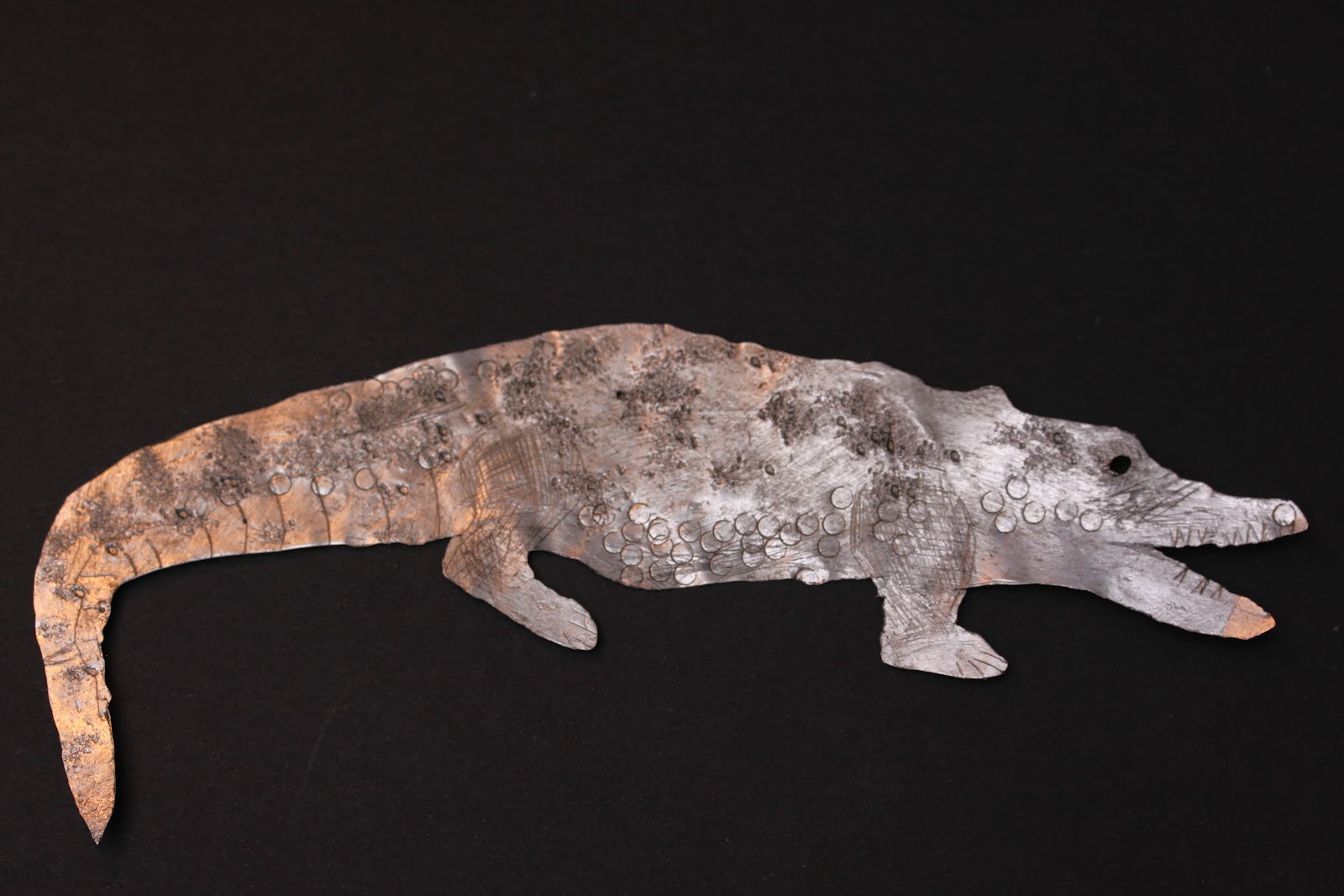
The metal was easy to cut, using scissors. I used a copper hammer and a mini anvil to pound the metal. Not only did this flatten it but it also gave it a distressed, aged look and got rid of the severe scissor edge. I used different tools to etch, scratch and create patterns in the metal. Finally, I added oil paint with a sponge which gave the metal a burnished look and aged feel.

I made the following animal amulets and researched superstitions related to the animals:

Monkey
An amulet carried during exams or tests to allow the person the ability to think through complex problems.


Fish
Wise and knowledgeable. Given to a person by someone who as told them a secret and want them to be silenced.


Donkey
The hairs from a donkey's cross were cures for ailments. Worn in a charm around the neck to guard against whooping-cough,toothache, fits and to ease teething in babies; sometimes the hairs were eaten in a sandwich!


Crocodile
Crocodile blood cures eye problems and snakebites.


This technique was simple and I think it is something which would be good to try in the workshop at the museum.


Link to the Small Blessings blog  http://pittrivers-amulets.blogspot.co.uk/

Link to the Flickr page  http://www.flickr.com/photos/76253275@N03/sets/72157629496147470/

Photos to follow...